When the counter goes dark, it is rarely the app
A customer is standing at your counter with cash in hand. The screen spins. The card reader times out. The line behind them gets longer. Most of the time, the software is fine. What broke sits underneath it, in the infrastructure that almost no vendor talks about on a sales call.
And it rarely breaks on a slow Tuesday. It breaks under load, when a platform has grown faster than the system beneath it was built to handle. That is the pattern worth understanding, because it is the one that takes a counter dark on your busiest day. If you run a pawn shop, jewelry store, or firearms business, the difference between a busy Saturday and a room full of people you cannot ring up lives in that infrastructure.
Growth is the real stress test
A platform that runs fine for a few hundred stores is not the same platform at a few thousand. Transaction volume, store count, and peak-day traffic all compound. Infrastructure that was sized for last year starts to buckle, and the cracks tend to show exactly when the load is highest.
This is why reliability has to be designed ahead of growth, not bolted on after an outage. The platforms that stay open are the ones whose capacity, architecture, and redundancy were built for the scale they are about to hit, not the scale they used to have. Infrastructure is not one thing you buy once. It is a set of decisions you have to keep making as you grow.
DNS is one layer nobody sells you
Every time your point of sale talks to its servers, processes a card, runs a background check, or syncs your A&D book, it first has to look up an address. That lookup is DNS, the directory that turns a name into a location on the internet. If DNS fails, it does not matter how good the software is. The app cannot find its way home.
On October 21, 2016, a single DNS provider named Dyn was hit by a massive attack. Twitter, Spotify, Reddit, and a long list of major sites went dark for hours, not because those sites failed, but because the directory in front of them did. The lesson for any business that lives online is simple. The directory is critical infrastructure, and it deserves the same attention as the software it points to.
Anycast: many doors instead of one
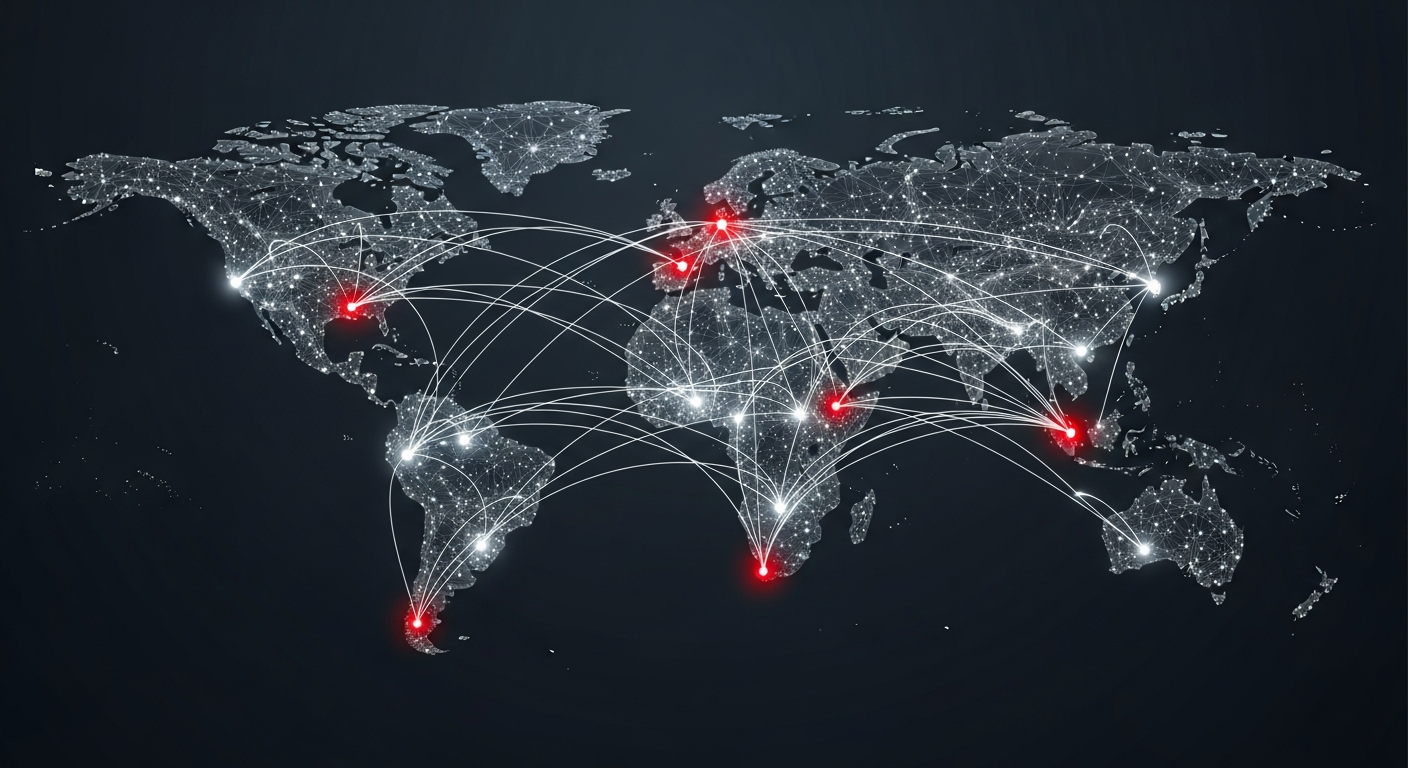
A basic setup points all of your traffic at one server in one place. If that location has a problem, everyone pointed at it is stuck. Anycast works differently. It advertises the same address from many locations at once, and the network automatically routes each request to the nearest healthy one.
For a store, that is the difference between a regional internet problem taking you offline and never noticing it happened. If one location is overloaded or down, traffic shifts to the next one in seconds, with nobody touching a setting. Anycast also absorbs attacks by spreading the load across dozens of sites instead of letting a single one buckle.
Redundancy is not the same as a backup
A backup is a copy you restore after something goes wrong. Redundancy means the second system is already running, already serving traffic, ready to carry the full load the moment the first one stops. Real redundancy for a point of sale platform looks like this:
- Two independent DNS providers, so one provider outage cannot take you offline.
- Servers in more than one region, so a single data center going dark does not stop a sale.
- Automatic failover, so the switch happens in seconds without a support ticket.
- Health checks that pull a failing location out of rotation before customers ever feel it.
This matters because even the largest providers fail. In 2025, IBM Cloud went through a series of authentication outages that locked enterprise customers out of core services for hours at a time, more than once in a single summer. A famous logo on the infrastructure is not protection. The protection is building so that no single failure can stop the business.
Infrastructure is more than DNS
DNS and routing are critical, but they are only part of the picture. Real reliability at scale is the whole stack working together:
- Capacity that scales ahead of demand, so a busy season does not overwhelm the system.
- Database replication and failover, so one database problem does not stop every store.
- Monitoring and incident response that catch trouble early, instead of waiting for the phones to ring.
- Release discipline, so one bad deployment does not become a company-wide outage.
- A track record at real scale, because running thousands of stores is a different problem than running a few.
When any one of these falls behind the growth curve, the result looks the same from the counter: the system is down, and nobody can ring a sale.
Why this hits independent retailers harder
A downtime hour for a pawn, jewelry, or firearms store is not just lost sales. It collides with the parts of the job that cannot wait:
- Your A&D book and pawn loans have to be accurate and on time. Compliance does not pause because your system is down.
- A firearms sale cannot finish without a 4473 and a background check. If the system cannot reach the network, the sale stops at the counter.
- Layaway payments, card payments, and customer history all run over that same connection.
For a single store, an outage is a bad afternoon. For an operator running several locations, it is every counter going quiet at the same moment.
Questions worth asking any point of sale vendor
- How does your system hold up on your busiest day, and have you tested it at that load?
- Do you run on more than one DNS provider, or just one?
- Is your routing anycast, so traffic finds the nearest healthy location on its own?
- If an entire region goes offline, does my store keep ringing sales?
- How fast does failover happen, and is it automatic or does someone have to flip a switch?
- What is your real, measured uptime, not the number printed in the contract?
- How many stores do you run today, and what happened the last time you had an outage?
If a vendor cannot answer these plainly, that is your answer.
How Bravo thinks about staying online
Bravo runs the software for more than 3,200 stores across the country. At that scale, reliability is not a feature you bolt on later. It is the foundation everything else sits on. We treat DNS, routing, and redundancy as core infrastructure, because a point of sale that cannot ring a sale is not a point of sale. It is an expensive paperweight.
See how Bravo is built to keep your counter open. Request a demo.